
Milestones
Why Our 100-Year Milestone Matters

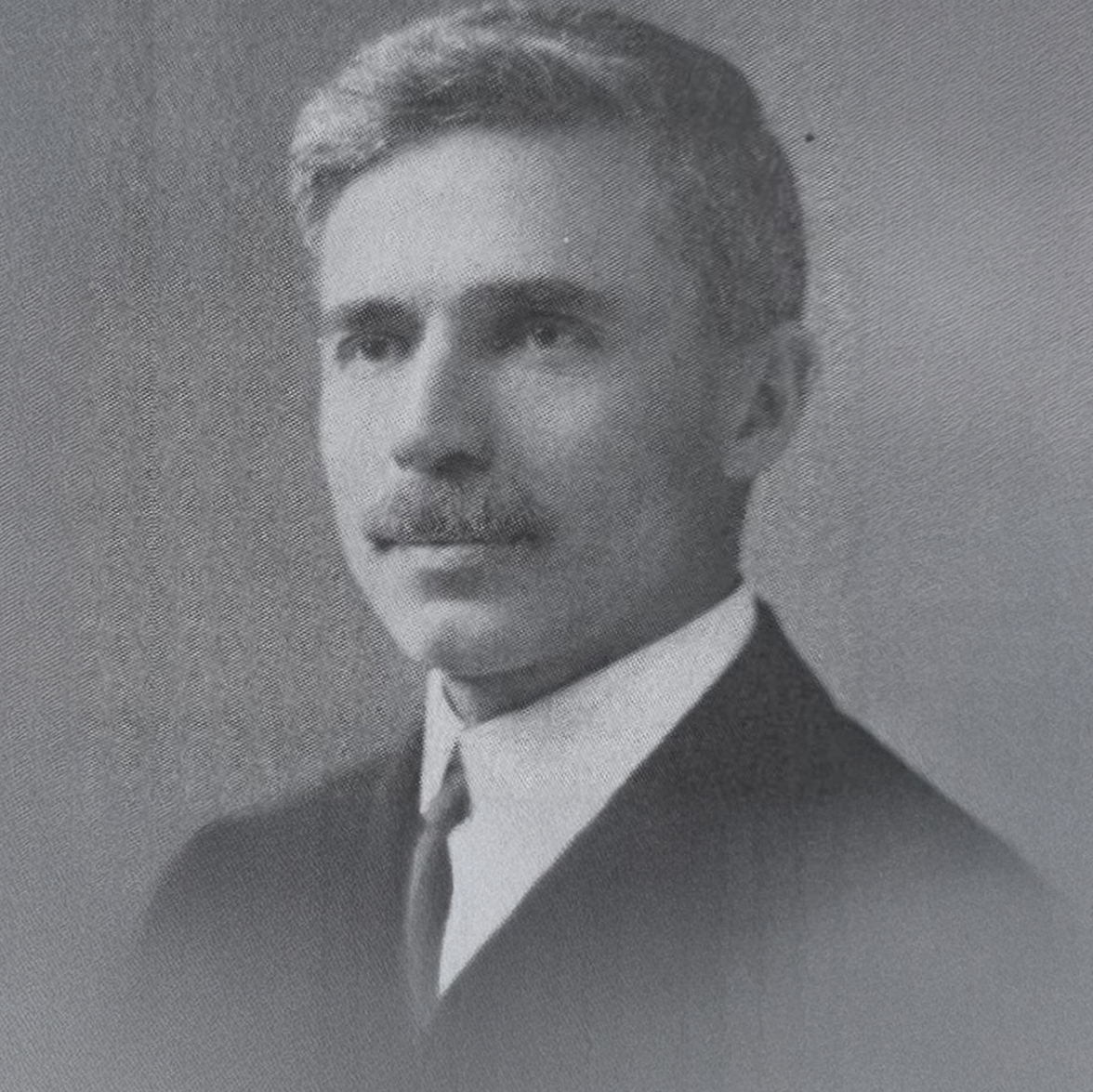
J. Edward Maybee
IPIC's First President (1926-27)
IPIC was founded in 1926 to protect and promote intellectual property in Canada.
Over the past century, our members have safeguarded ideas, championed innovation, and shaped the IP landscape. Today, we continue to lead with expertise, integrity, and a commitment to supporting creators and businesses across the country.
Meet the Innovators100 Years of Impact

1.7 Million
Patents Protected
1.6 Million
Trademarks Supported

500+
Advocacy Submissions
A Century of Protecting the Original
Explore the moments that defined IPIC. From early legal victories to major policy contributions, our timeline showcases the people, ideas, and milestones that have shaped Canada’s IP landscape.
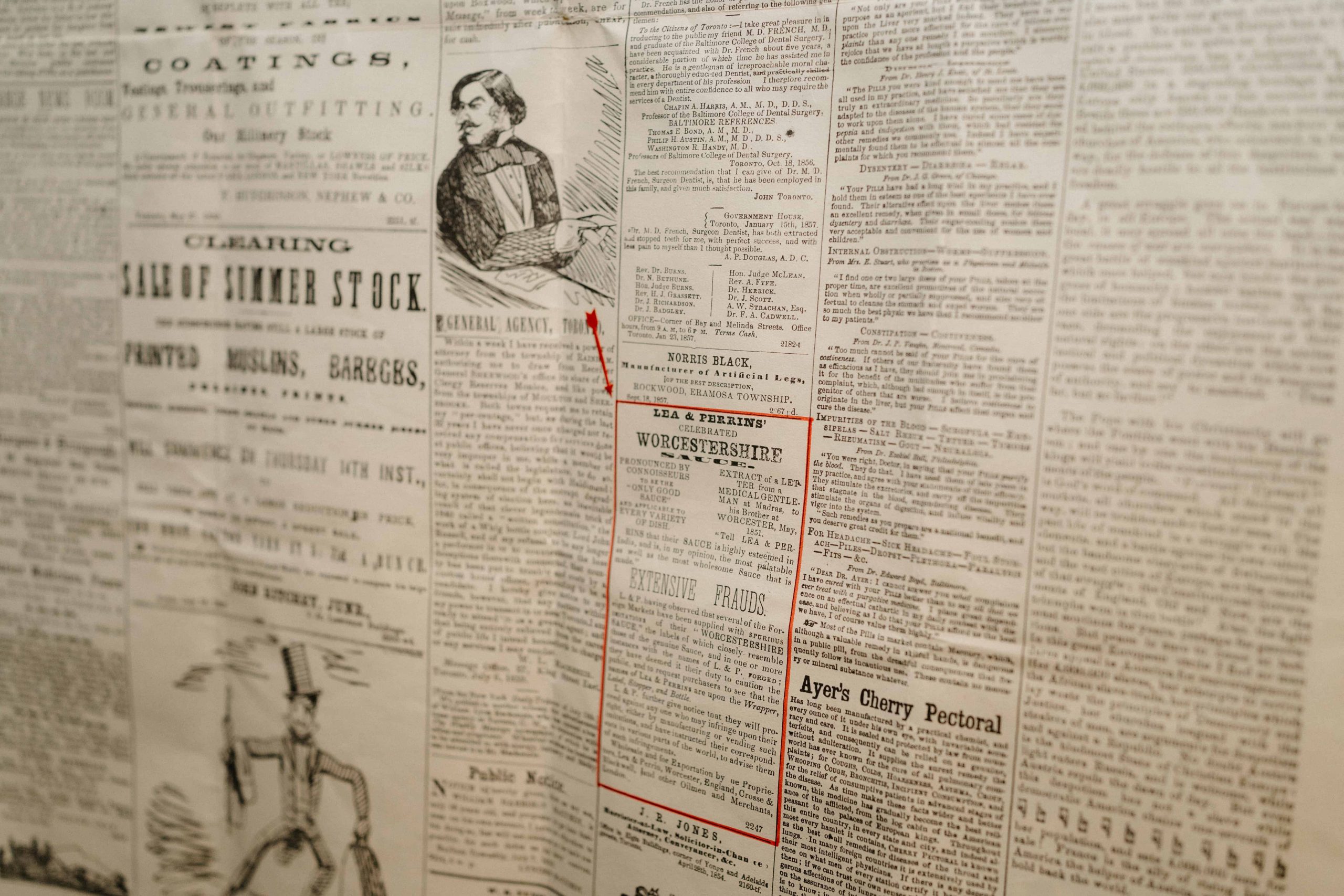
1869: The Profession Before Confederation
Canada’s first federal Patent Act passed in 1869, two years after Confederation. It applied to the four original provinces and initially required inventors to have lived in Canada for the previous twelve months. Previously, each province had its own patent laws.
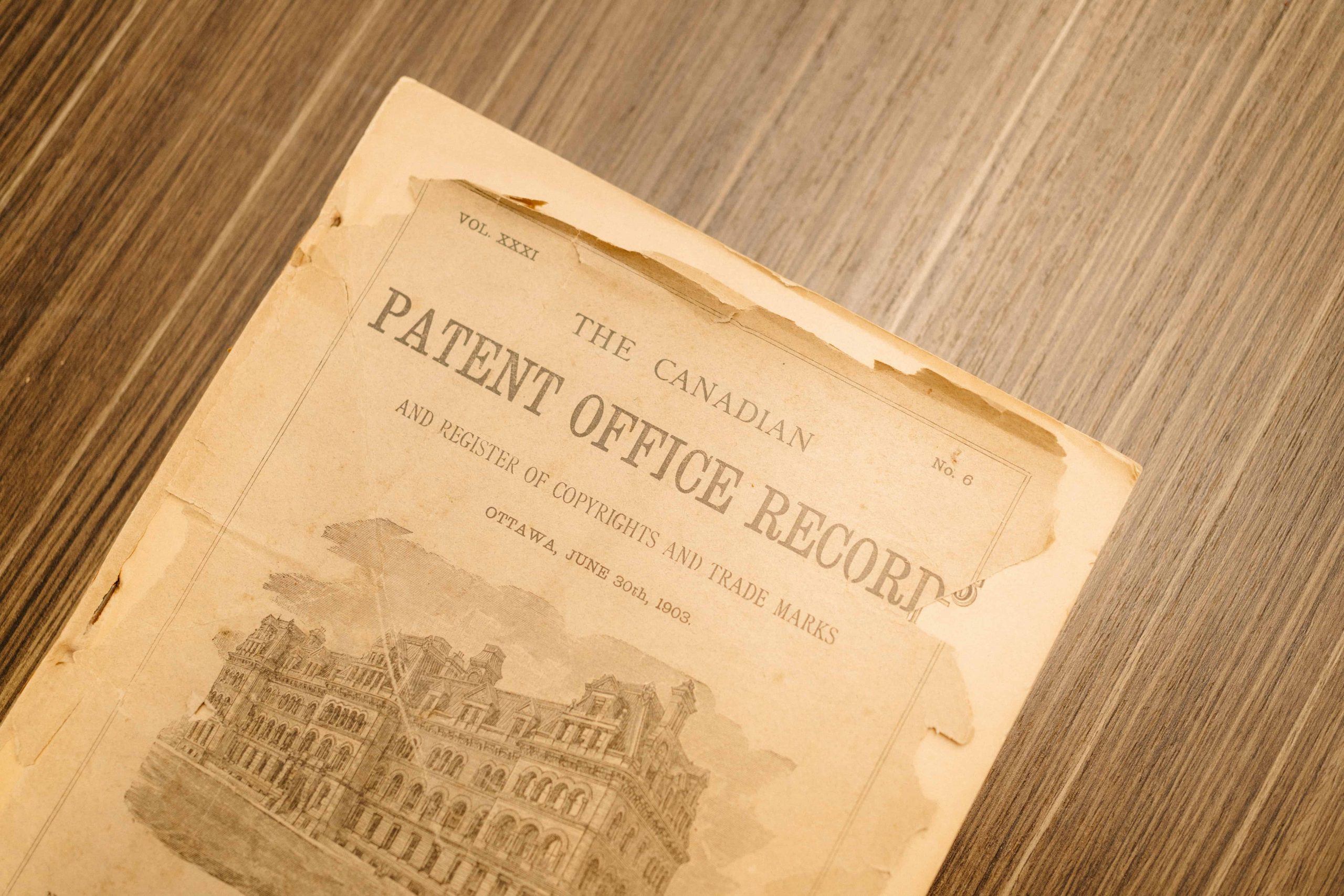
1872: The Profession After Confederation
In 1872, the Patent Act was amended to allow foreigners to obtain patents in Canada. This change led to the creation of Canada’s first Patent Office in Ottawa and laid the foundation for a self-sustaining patent profession that would grow and flourish in the years to come.

1926: Founding of IPIC
Originally founded in 1926 as the Canadian Patent Solicitors, the Institute represented practitioners’ interests in patents, trademarks, and other IP areas. Ottawa-based J.E. Maybee served as its first president (1926–1927).

1928: Canada Joins Berne Convention
In 1928, Canada joined the Berne Convention for the Protection of Literary and Artistic Works, aligning its copyright laws with international standards.
1935: IPIC Officially Incorporated
In 1935, the Institute was formally incorporated by Letters Patent, giving it legal status under Canadian law and codifying its purpose and objectives.

1948: Imposition of Qualifying Exam
The rules were amended to establish two requirements for practitioners before the Patent Office: Canadian residency and passing a qualifying examination.
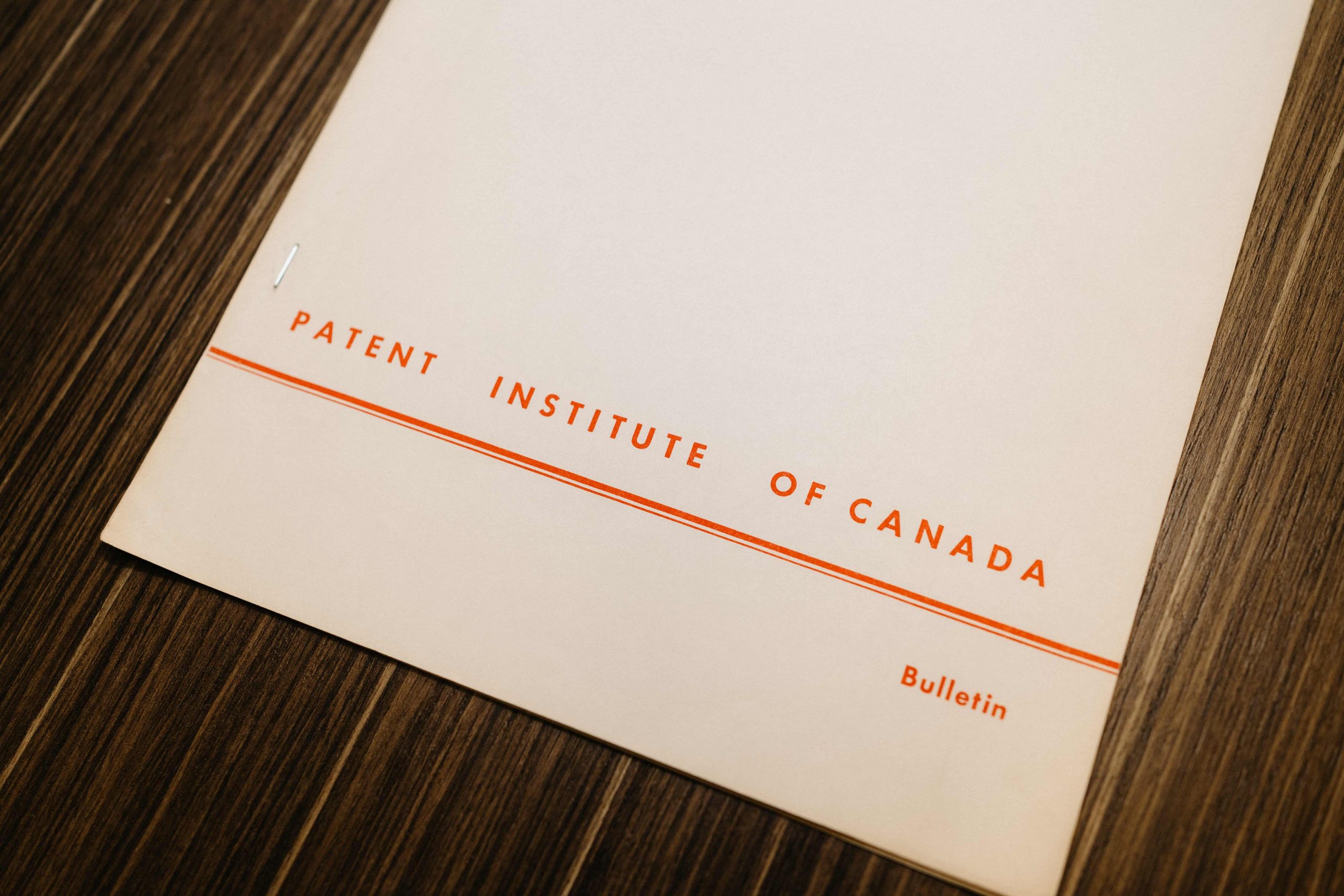
1956: Launch of the Institute’s Bulletin
In the mid-1950s, the Institute began publishing its official Bulletin (Patent and Trademark Institute of Canada Bulletin). This major communications effort informed members about new laws and Institute news.

1978: First Woman President
Joan Clark Q.C. became IPIC’s first female President (1978–79).

2000: World Intellectual Property Day Established
In 2000, WIPO member states designated April 26 as World Intellectual Property Day. This date was chosen because it marks the entry into force of WIPO’s own convention, and the annual observance promotes public awareness of how IP fuels innovation and creativity.

2012: Copyright Modernization Act Enacted
Passed in 2012, the Copyright Modernization Act (Bill C-11) updated Canadian copyright law for the Internet age. It did this by implementing WIPO Internet treaties, introducing new exceptions (for education, parody, etc.), and establishing a notice-and-notice regime for online infringement.

2018: Canada Joins Hague Agreement (Industrial Designs)
In 2018, Canada acceded to the 1999 Geneva Act of the Hague Agreement on international industrial designs. The accession took effect November 5, 2018, allowing Canadian designers to use the international design registration system.
2019: Overhaul of Canadian Trade-marks Act
Major amendments to the Trade-marks Act came into force June 17, 2019. These reforms aligned Canada with the Nice Classification, the Singapore Treaty, and included Canada’s accession to the Madrid Protocol, while expanding registrable marks to include colours, holograms, etc.
The People
The People Behind IPIC
IPIC's strength comes from its members - patent & trademark agents, IP lawyers, innovators, judges, and advocates who have championed originality for generations.
Discover the individuals whose work has significantly influenced IP law in Canada.
Share Your Story
Chris Dejardin
Chris Dejardin is a trademark agent, educator, and recipient of IPIC’s Shelley Jones Outstanding Contribution Award.
A two-time Chair and longest-serving member of the Trademark Agent Training Committee, he has dedicated hundreds of hours to developing and delivering education for agents in training.
Chris has been instrumental in modernizing IPIC’s trademark courses and exam preparation programs, including leading the development of IPIC’s first Trademark Agent Knowledge Test. A Partner at Cassan Maclean, his practice covers all aspects of trademark prosecution and internet-related disputes. He is also recognized internationally as a leading trademark practitioner by World Trademark Reporter’s Top 1000 publication.

Mary Munro
Mary Munro is recognized for her exceptional contributions to IP administration and professional development.
She began her career at Borden Ladner Gervais LLP in 1990 as a paralegal and now serves as National Director, Paraprofessional Services. Her own career progression has informed her strong commitment to education and continuous learning.
Within IPIC, Mary has played a key role in strengthening training for IP administrators, serving as Chair of the Trademark and Patent Administrators’ Programs. She has also been deeply involved in national and international forums focused on patent administration. Her work has helped elevate professional standards and expand opportunities across the IP community.
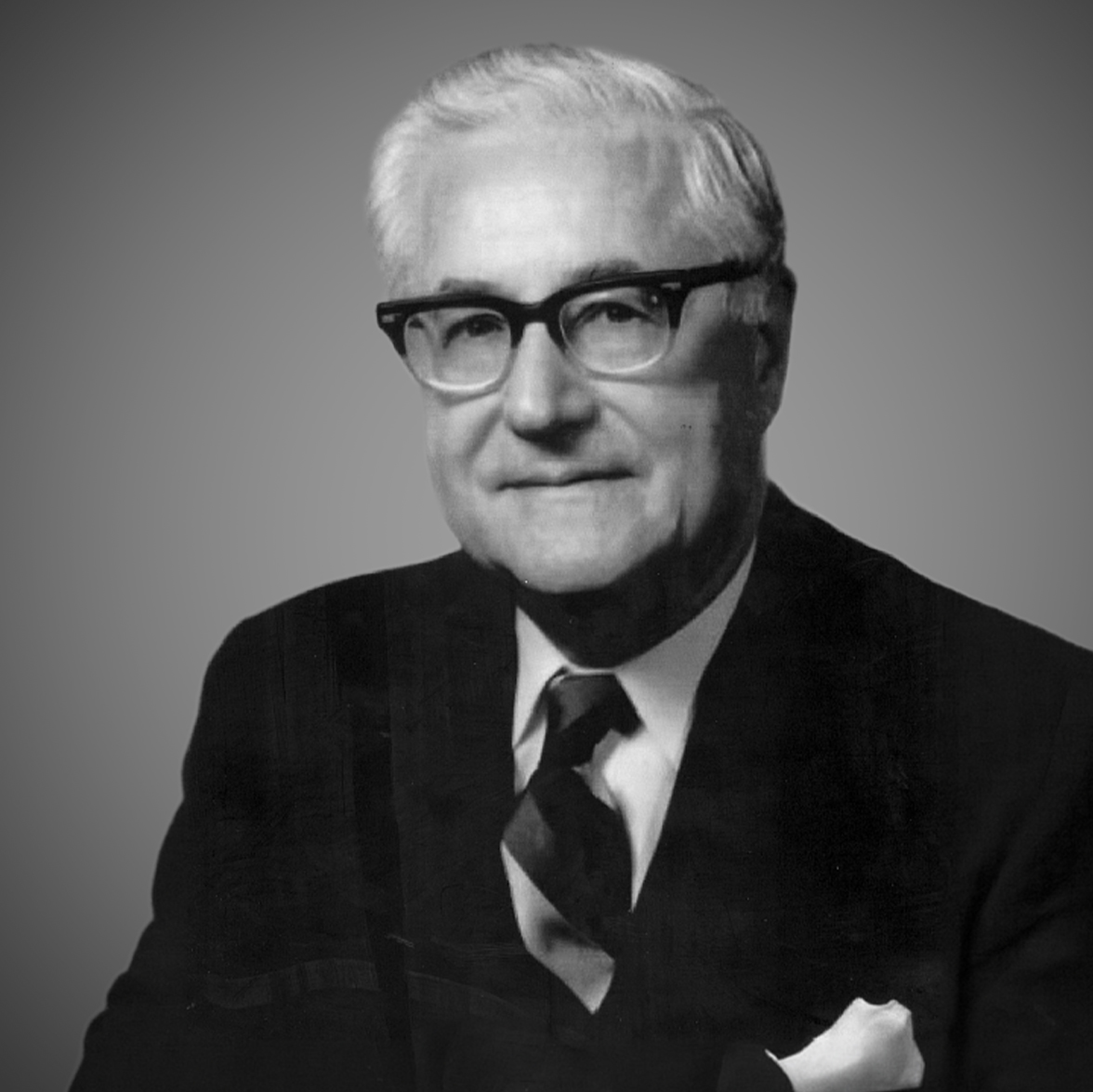
Gordon F. Henderon (In Memory)
Gordon F. Henderson was a central figure in the development of Canadian intellectual property law and the professionalization of the IP bar.
Joining Gowlings in 1937, he later became chairman and helped shape the firm into a leader in intellectual property law.
In 1941, he founded the Canadian Patent Reporter, writing its headnotes and commentary for decades and helping systematize Canadian IP jurisprudence.
Gordon served as President of IPIC (1953–1955) during a formative period for the IP profession. He also played a key role in the development of Canada’s copyright and music licensing framework through his work with the Society of Composers, Authors and Music Publishers of Canada (SOCAN).

Joan Clark (In Memory)
Joan Clark was a trailblazer in IP whose career helped reshape both the legal profession and IPIC.
After earning a B.A. from McGill University, she pursued a law degree in French at the Université de Montréal, graduating at the top of her class with the Governor General’s Medal in 1954 — the first woman to achieve this distinction. Admitted to the Bar of Québec, she joined Ogilvy Renault (now Norton Rose Fulbright), becoming the firm’s first female partner and the first woman to lead its Intellectual Property practice.
A formidable litigator, Joan argued three cases before the Supreme Court of Canada. She was IPIC’s first female Fellow, served as President from 1978–1979, and became the first Canadian and first woman to serve as President of the International Association for the Protection of Intellectual Property. In 2019, she was honoured with IPIC’s inaugural Trailblazer Award.

The Honourable Roger T. Hughes, K.C (In Memory)
Roger T. Hughes was a respected leader whose career bridged intellectual property law and the Canadian judiciary.
After earning an engineering degree from Queen’s University and a law degree from the University of Toronto, he built a successful practice as a barrister specializing in IP litigation.
He later served with distinction as a judge of the Federal Court of Canada from 2005 until his retirement in 2016. Known for his clarity, fairness, and deep understanding of both law and technology, Justice Hughes brought lasting gravitas to Canada’s IP landscape and remains a highly regarded figure within the IPIC community.

Joan Van Zant (In Memory)
Joan Van Zant was a highly respected leader in Canada’s intellectual property profession and a dedicated contributor to IPIC for more than four decades.
She was among the first women registered as a patent agent in Canada in 1968 and later as a trademark agent in 1981, eventually serving as a senior partner at Norton Rose Fulbright. Joan played a pivotal role in shaping professional regulation, including advancing the formation of the College of Patent Agents and Trademark Agents.
A Past President of IPIC (1997–1998) and Member of Distinction (2015), she contributed to numerous committees, mentored emerging professionals, and helped strengthen governance and professional standards, leaving a lasting impact on IPIC and the Canadian IP community.

Meika Ellis
Meika Ellis is a lawyer and trademark agent whose work reflects IPIC’s commitment to community engagement and reconciliation.
Practising on the unceded territory of the Anishinaabe Algonquin Nation, she brings a thoughtful, inclusive approach to trademarks, copyright, Indigenous Knowledge, and emerging technologies.
A proud member of the Gwich’in Fort McPherson Band, Meika actively works to bridge gaps between Western IP systems and Indigenous creators. Her advocacy, litigation experience, and committee leadership earned her recognition as the inaugural recipient of the Roger T. Hughes Future Leader Award. Her work represents the evolving future of Canada’s IP profession.

Stephanie Chong
Stephanie Chong made history as IPIC’s first Racialized President, serving from 2020–2021 after years of leadership roles including Treasurer, Secretary, and Vice President.
Stephanie spearheaded many of IPIC’s current EDI initiatives. Thanks to her efforts, IPIC is internationally recognized as a voice at the world table on EDI matters in IP.

Cynthia Rowden
Cynthia Rowden is recognized for her leadership in trademark law and her long-standing commitment to advancing the IP profession.
A member of IPIC since 1980, she has chaired and served on numerous committees focused on international trademarks, legislation, practice, public awareness, and women in IP.
Cynthia served on IPIC Council for many years and was President from 2005–2006. A frequent speaker, she has contributed extensively to dialogue on trademark policy and practice in Canada and beyond. In recognition of her impact, IPIC named her a Member of Distinction. Outside the profession, Cynthia is also known for her adventurous spirit — including climbing Mount Kilimanjaro.

Giuseppina D’Agostino
Giuseppina D’Agostino is a leading academic and policy voice in Canadian intellectual property law.
A professor at Osgoode Hall Law School, she specializes in copyright, IP, emerging technologies, and innovation policy, and is frequently called upon by governments and institutions for expert advice. Her scholarship has been cited by the Supreme Court of Canada, and she serves as Editor-in-Chief of the Intellectual Property Journal.
Beyond academia, she has founded and led numerous initiatives bridging law, technology, and public access, including IP Osgoode, the IP Innovation Clinic, and the Centre for Artificial Intelligence & Society. Recognized nationally for her influence and leadership, she continues to shape conversations at the intersection of IP, innovation, and society.

Lorne M. Lipkus
Lorne M. Lipkus is a founding partner of Lipkus Law LLP and a leading figure in Canadian intellectual property litigation.
His practice focuses on protecting intellectual property and intellectual capital through strategic enforcement, particularly in anti-counterfeiting, piracy, trade secrets, and fraud.
Known for his practical approach and mentorship, Lorne has long been engaged with IPIC and the broader IP community. His work spans litigation, law enforcement collaboration, and policy engagement, reflecting a career dedicated to safeguarding innovation. Recognized as a Member of Distinction, he exemplifies professional excellence and sustained service to the IP profession.

Peter W. McBurney (In Memory)
Peter McBurney was a long-standing leader in the Canadian IP community and a Past President of IPIC (1985–1986).
A member of the Institute for 62 years, he trained as a patent agent before founding and leading respected boutique IP firms, including Sim & McBurney and later Aird & McBurney.
Peter specialized in patent and industrial design prosecution, licensing, and international IP practice, particularly in electronics. Beyond his professional work, he was deeply committed to mentorship, charitable initiatives, and IPIC’s bursary programs. His legacy reflects service both within and beyond the profession.

Stephen Perry
Stephen Perry is a renowned Canadian patent agent and co-author of Canadian Patent Law, a foundational text in the field.
His work has helped shape generations of practitioners and contributed significantly to the understanding and practice of patent law in Canada.
A deeply engaged member of IPIC, Stephen was named a Member of Distinction in recognition of his lasting impact on the profession and the Institute. His career reflects a blend of technical expertise, scholarship, and service that continues to influence Canadian IP practice.

Leonora Hoicka
Leonora Hoicka is a lawyer and registered patent and trademark agent whose career spans private practice, in-house leadership, and global IP strategy.
After beginning her career in Toronto, she joined IBM Canada and later IBM Corporation in New York, where she held senior roles, including Chief Trademark Counsel and Associate General Counsel for IP.
A dedicated IPIC volunteer, Leonora served on numerous committees, was elected to Council and the Executive, and served as IPIC President from 2008–2009. Following the formation of CPATA, she contributed to examination reform and governance, later serving on CPATA’s Board. Her career reflects a deep commitment to professional leadership and education.
Achievements
100 Years of Achievements in IP
For a century, IPIC has been honoured for excellence in supporting Canadian innovators and advancing intellectual property.
Here are some of our proudest recognitions:
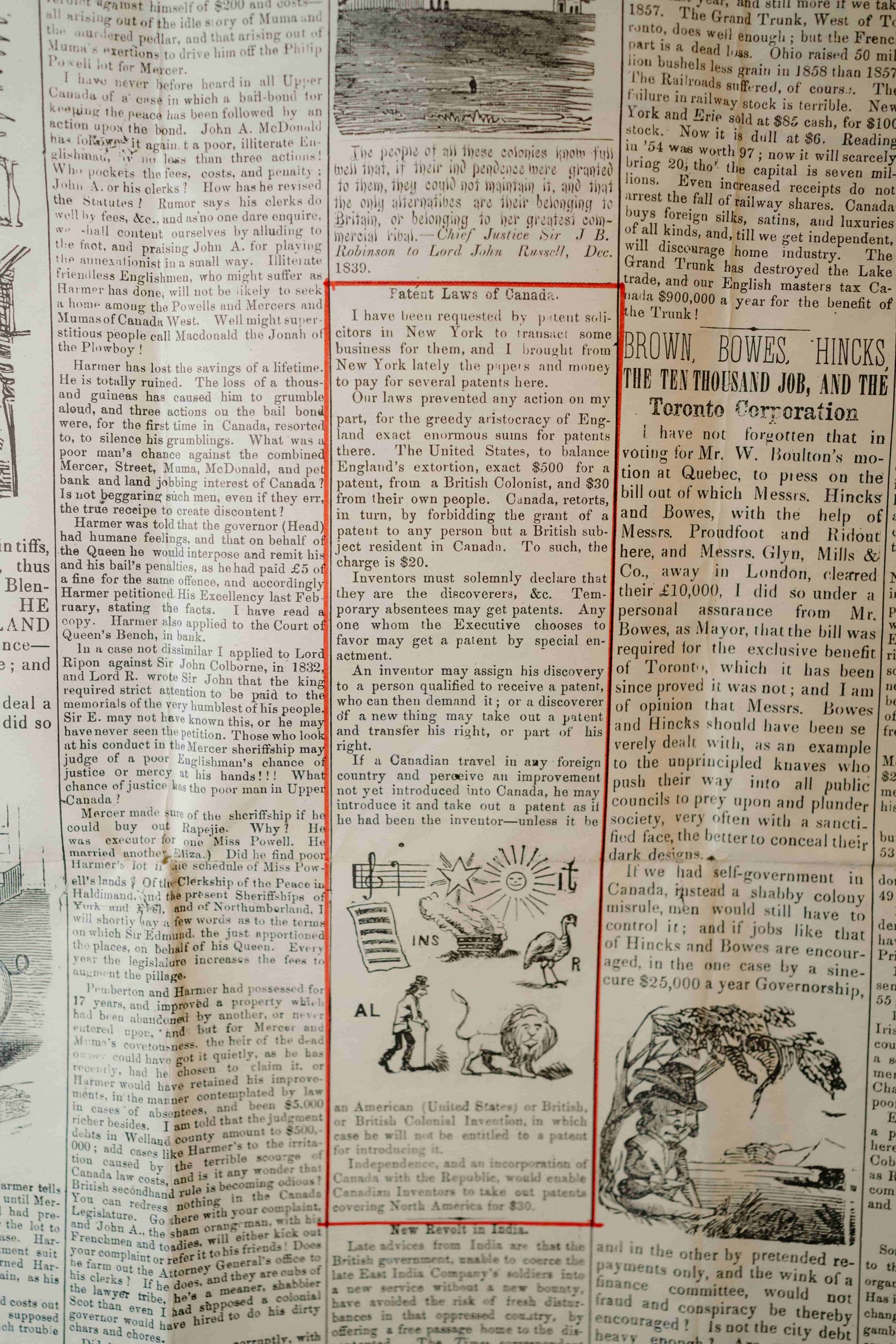
(1872) The Patent Act
The Patent Act was amended to allow foreigners to obtain patents in Canada, prompting the creation of Canada’s first Patent Office in Ottawa. This Act laid the foundation for a self-sustaining patent profession that would grow and flourish over time.
(2015) Agent Privilege
IPIC successfully advocated for patent and trademark agents to receive legal privilege protections comparable to solicitor-client privilege. Amendments to the Patent and Trademarks Acts, passed in 2015, protect confidential client communications, recognizing agents’ critical role in Canada’s innovation ecosystem and aligning Canada with international standards.
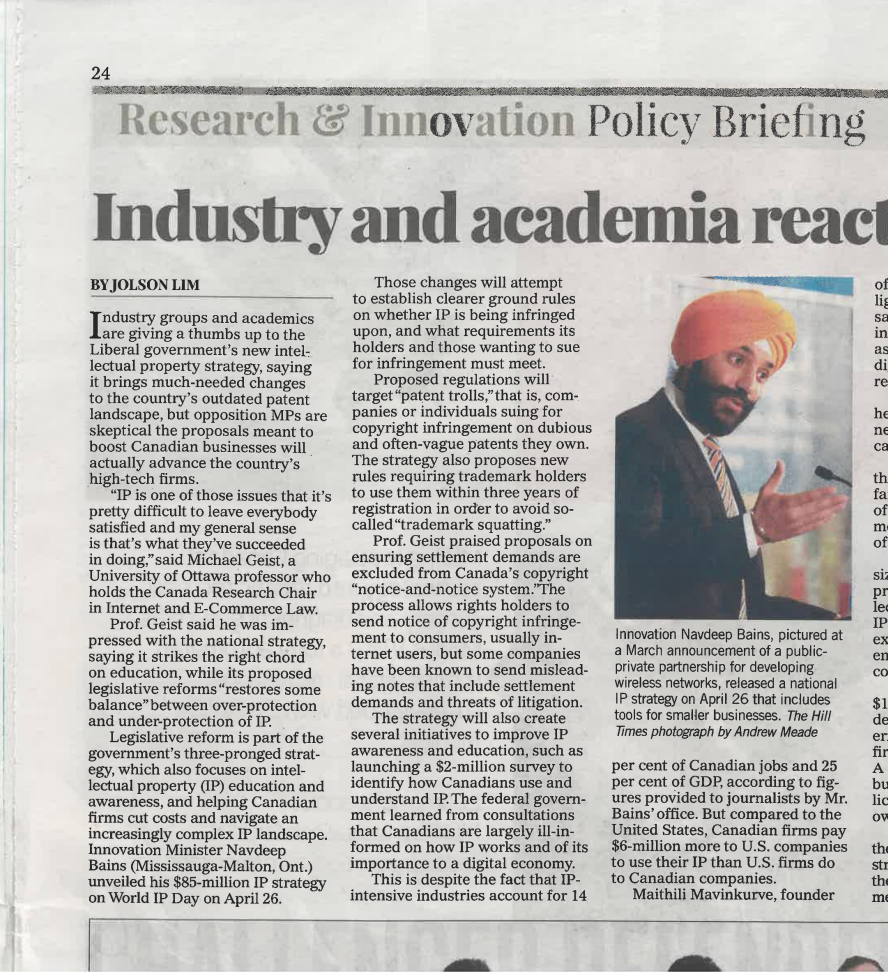
(2018) Launch of Canada's First National IP Strategy
Canada’s first comprehensive Intellectual Property Strategy, launched in April 2018, underscored the importance of IP to innovation and economic growth. For IPIC, it validated decades of advocacy and led to the creation of an independent regulatory body—the College of Patent Agents and Trademark Agents (CPATA)—enhancing public trust, professional standards, and accountability.

(2021) Formation of Regulator
Decades of IPIC advocacy culminated in the creation of CPATA, Canada’s first federally regulated self-governing body for patent and trademark agents. Officially established in June 2021, the College sets national standards of competence, ethics, and professional integrity, advancing public trust and professionalism in IP.



Join Us
Join the Centennial Celebration

Our Centennial Sponsors
Thank you to our sponsors for celebrating a century of innovation with IPIC






IPIC Staff
Our people make progress possible.

Meet the IPIC staff dedicated to supporting members, advancing the profession, and safeguarding creativity across Canada. Back row, left to right: Adam Kingsley, Anne-Josée Delcorde, Asha Labrecque, Jesse Auguste.
Front row, left to right: Jacilyn Stettner, Kim Arial, Loreto Lamb.
Not Pictured: Robyn O'Neill, Charu Bhargava, Gina Makkar
Store
Shop the IPIC100 Collection
Celebrate a century of innovation, connection, and creativity with official IPIC100 merchandise and support the IPIC Foundation.
From stylish tees and cozy sweatshirts to hoodies and hats, every piece in the collection lets you show your IPIC pride — all in support of IP education.
Visit the IPIC100 Store


From stylish tees and cozy sweatshirts to hoodies and hats, every piece in the collection lets you show your IPIC pride — all in support of IP education.
Visit the IPIC100 StoreWork With Us
Join IPIC in supporting Canadian innovators and advancing intellectual property. Explore opportunities to collaborate, sponsor, or partner with us to make a meaningful impact.